

Patients with knee pain, shoulder injuries, arthritis, or tendon problems often ask whether stem cell therapy can regenerate damaged tissue. It is a reasonable question, especially for people who want to explore non-surgical care before considering an operation.
The answer requires realistic expectations. Orthobiologic treatments may be discussed for selected orthopedic conditions, but no injection can guarantee cartilage regrowth, complete tendon repair, pain relief, or avoidance of surgery. The right treatment depends on the diagnosis, the severity of damage, and the patient's individual goals.
What Does "Stem Cell Therapy" Mean in Orthopedic Care?
The term "stem cell therapy" is often used broadly, but it can refer to different types of biologic treatments. In orthopedic care, a consultation may involve discussing bone marrow aspirate concentrate, known as BMAC, or an allograft amniotic biologic product.
These treatments are not the same. They have different sources, preparation methods, intended uses, risks, and limitations. Patients should ask exactly which product is being recommended and why it may be relevant to their condition.
A clear diagnosis should always come first. Knee pain, for example, may be caused by arthritis, a meniscus injury, ligament instability, cartilage damage, or a tendon problem. Each condition requires a different treatment approach.
What Is BMAC Treatment?
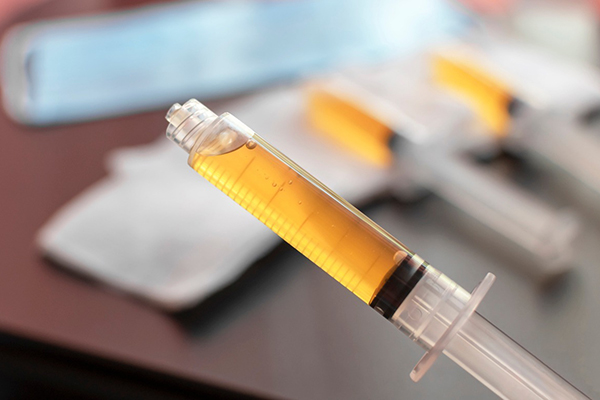
Bone marrow aspirate concentrate, or BMAC, is prepared from a patient's own bone marrow. Bone marrow is collected through a small needle procedure, processed in a centrifuge, and concentrated before being delivered to the planned treatment area.
We may evaluate BMAC for certain joint, tendon, and cartilage-related conditions. It may be performed as a stand-alone procedure or used in connection with arthroscopic surgery when clinically appropriate.
The treatment plan depends on the patient's symptoms, imaging, joint condition, injury history, and activity goals.
What Are Allograft Amniotic Biologics?
Allograft amniotic biologic products are derived from donated placental tissue collected after healthy full-term births. These products may contain components such as growth factors, cytokines, and extracellular matrix material.
They may be discussed for certain musculoskeletal conditions, including joint pain, arthritis, and selected tendon or ligament concerns. Treatment is generally performed as an outpatient injection under sterile conditions, often with ultrasound or fluoroscopic guidance.
Results are variable. Patients should understand the intended role of the treatment, alternatives, recovery instructions, potential risks, and expected costs before making a decision.
Can These Treatments Regenerate Damaged Tissue?
No treatment should be presented as a guaranteed way to regenerate damaged tissue. Research in orthobiologics and regenerative medicine is ongoing, but outcomes differ widely between patients and conditions.
For some patients, an orthobiologic treatment may be considered as part of a non-surgical plan. For others, it may not be appropriate because of severe shoulder or elbow arthritis, a complete tendon tear, significant instability, infection, fracture, or advanced joint damage.
A thoughtful consultation helps patients understand whether a treatment is intended to manage symptoms, support rehabilitation, complement surgery, or address another treatment goal.
What Does the FDA Say About Stem Cell Treatments?
The U.S. Food and Drug Administration states that regenerative medicine therapies, including products marketed as stem cell treatments, have not been approved to treat orthopedic conditions such as osteoarthritis, tendonitis, or joint pain.
Patients considering a regenerative medicine product should ask whether the proposed treatment is FDA-approved for their condition, whether it is being offered under an FDA-authorized clinical trial, what evidence supports its use, and what alternatives are available. This is especially important when claims promise tissue regeneration or a cure.
What Happens During a BMAC Procedure?
For BMAC treatment, the skin around the collection site is cleaned and numbed. Bone marrow is aspirated, processed to create the concentrate, and then injected into the targeted area using appropriate imaging guidance.
After treatment, patients may be advised to limit strenuous activity for several days, use ice for comfort, and follow a guided recovery plan. Follow-up visits help monitor symptoms and determine the next steps.
Risks and Considerations
All procedures have potential risks. With BMAC or injection-based biologic treatments, possible concerns can include pain or swelling at the treatment site, infection, nerve or blood vessel injury, and variable effectiveness.
Patients should also discuss medications, blood thinners, medical conditions, allergies, and prior treatments with the care team before treatment. A complete discussion of benefits, risks, alternatives, and costs supports informed decision-making.
Frequently Asked Questions
Q. Is BMAC the same as stem cell therapy?
BMAC is a biologic treatment prepared from a patient's own bone marrow. It is often discussed under the broader regenerative medicine or orthobiologics category, but it is not the same as every treatment marketed as stem cell therapy.
Q. Can stem cell therapy cure arthritis?
No. Arthritis cannot be cured with an injection. Treatment may help manage symptoms for some patients, but results vary and advanced arthritis may require other treatment options.
Q. Is BMAC treatment surgery?
BMAC involves a bone marrow collection procedure and an injection. It may be performed alone or used as part of a surgical treatment plan, depending on the patient's condition.
Q. How long does it take to see results?
Recovery and response vary by patient and treatment area. Some patients may notice changes gradually over several weeks, while others may not experience meaningful improvement.
Q. Who may be a candidate for BMAC treatment?
Candidates are determined after a detailed orthopedic evaluation. The diagnosis, imaging results, severity of injury, health history, and treatment goals all matter.
Dr. William P. Toole, MD, FAAOS is a board-certified, fellowship-trained orthopedic surgeon and sports medicine specialist serving patients across Boynton Beach, Boca Raton, Delray Beach, and the greater Palm Beach County area. A graduate of the honors college at Clemson University, Dr. Toole earned his medical degree with honors from the University of South Carolina School of Medicine and completed his orthopedic surgery residency at the University of Florida / Mayo Clinic Florida — one of the most respected training programs in the country. He is certified by the American Board of Orthopaedic Surgery, a Fellow of the American Academy of Orthopaedic Surgeons (FAAOS), and a member of the American Orthopaedic Society for Sports Medicine.
Prior to establishing his Florida practice, Dr. Toole served as Assistant Team Physician for four major professional sports franchises, the Houston Texans (NFL), the Houston Astros (MLB), the Houston Rockets (NBA), and the Houston Dynamo (MLS), bringing elite-level orthopedic experience to every patient he treats today. He specializes in arthroscopic and reconstructive surgery of the shoulder and knee, ACL reconstruction, rotator cuff repair, cartilage restoration, MACI procedures, and outpatient joint replacement, all performed using the latest minimally invasive techniques designed to get patients back to peak performance as quickly and safely as possible.


